

Learn how to start freelancing as a student with this step-by-step guide covering skills, platforms, pricing, portfolios, and time management for busy learners.
Balancing lectures, assignments, and exams with a desire to earn money sounds impossible — until you discover freelancing. If you’ve been searching for how to start freelancing as a student, you’re in the right place. Freelancing has become one of the most flexible ways for learners to earn income, build real-world skills, and gain professional experience long before graduation. Unlike a traditional part-time job with fixed shifts, freelancing lets you choose your own hours, pick projects that interest you, and work from anywhere — your dorm room, the campus library, or your childhood bedroom during semester break.
This guide walks you through everything you need to know about how to start freelancing as a student, from identifying marketable skills to landing your first paying client. Whether you’re a college freshman looking for pocket money or a final-year student trying to build a portfolio before graduation, this roadmap will help you get there.
Why Freelancing Makes Sense for Students
Before diving into the “how,” it’s worth understanding the “why.” Freelancing offers a unique combination of benefits that traditional part-time jobs simply can’t match.
Flexibility around your class schedule is the biggest draw. You decide when to work — early mornings, late nights, or weekends — instead of fitting your studies around someone else’s shift roster. Real-world experience is another major advantage; freelance projects often teach you more about client communication, deadlines, and professional workflows than a classroom ever could. Freelancing also lets you earn while you learn, turning skills you’re already developing in class (writing, coding, design, marketing) into actual income. Finally, it helps you build a portfolio early, so by the time you graduate, you already have real client work to show employers instead of a blank resume.
If you’re serious about learning how to start freelancing as a student, understanding these benefits will help you stay motivated during the slower early weeks.
Step 1: Identify a Marketable Skill You Already Have
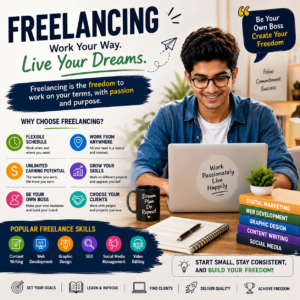
You don’t need years of experience to start freelancing. Many students already possess skills that businesses are willing to pay for. Common student-friendly freelance skills include:
- Content writing and copywriting – blog posts, product descriptions, social captions
- Graphic design – logos, social media templates, presentation decks
- Web development and coding – WordPress sites, small apps, bug fixes
- Social media management – scheduling posts, growing accounts, basic analytics
- Video editing – short-form content, YouTube edits, Reels
- Virtual assistance – data entry, email management, scheduling
- Tutoring and academic help – subjects you excel in, test prep, language teaching
- Translation and transcription – if you’re bilingual or multilingual
If you’re unsure which skill to lean into, start with what you’re already studying or naturally good at. This is often the fastest way to figure out how to start freelancing as a student without spending months learning something brand new.
Step 2: Sharpen Your Skills Before You Pitch
Even if you have a foundation, spend a week or two polishing your craft before approaching clients. Free and low-cost resources like YouTube tutorials, Coursera, HubSpot Academy, and Google’s free certifications can help you go from “decent” to “hireable” quickly. Practice on personal projects first — write three sample blog posts, design a few mock social media graphics, or build a small website for a fictional business. This practice work becomes the foundation of your portfolio, which is essential for the next step.
Step 3: Build a Simple Portfolio
Clients want proof you can deliver, not just promises. A portfolio doesn’t need to be elaborate — a free Notion page, a simple website, or even a well-organized Google Drive folder works fine when you’re just starting out. Include three to five of your best sample pieces, a short bio explaining who you are and what you offer, and clear contact information so interested clients can reach you easily. If you have zero paid experience yet, create spec work — mock projects designed specifically to showcase your abilities. This is a completely normal and widely accepted part of learning how to start freelancing as a student.
Step 4: Choose the Right Freelance Platforms
Picking the right marketplace matters, especially when you’re new. Some platforms are far friendlier to beginners than others.
Fiverr is one of the most student-friendly options because sellers create their own gig listings at any price point, with no portfolio review, approval queue, or minimum experience required — a listing can go live the same day you create your account. This makes it an excellent low-barrier entry point.
Upwork remains one of the largest freelance marketplaces worldwide, offering both hourly and fixed-price contracts across categories like development, design, writing, marketing, and finance, though it can be more competitive for first-time freelancers.
Other useful platforms for students include Freelancer.com and PeoplePerHour for general gig-hunting, Toptal for advanced students with strong technical or design skills once you’ve built experience, and niche tutoring platforms for students who want to teach subjects they excel in. Many career-focused platforms also now offer micro-internships, which are short, paid, project-based engagements that work well around a class schedule and add credibility to a resume.
Rather than joining every platform at once, pick one or two and focus your energy there. Spreading yourself too thin is one of the most common mistakes students make when figuring out how to start freelancing as a student.
Step 5: Set Fair (But Not Underpriced) Rates
Pricing is one of the trickiest parts of freelancing, especially for beginners. Research what others with similar skills charge on your chosen platform, then start slightly below the average to attract your first few reviews — but avoid pricing yourself so low that clients question your quality or that you burn out for minimal pay. As you gain testimonials and experience, gradually raise your rates every few projects. Most successful freelancers who figured out how to start freelancing as a student the smart way treat their early gigs as reputation-building investments, not just paychecks.
Step 6: Write a Winning Proposal or Gig Description
Your pitch is often the deciding factor between landing a client and getting ignored. Keep your proposals short, specific, and client-focused rather than generic. Mention the client’s actual project by name, briefly explain how you’ll solve their specific problem, and include a relevant sample or portfolio link. Always end with a clear, simple call to action, such as offering to hop on a quick call or start immediately. Avoid copy-pasting the same generic message to every client — personalization dramatically improves your response rate and is a core skill anyone learning how to start freelancing as a student needs to develop early.
Step 7: Manage Your Time Like a Pro
The hardest part of freelancing as a student isn’t finding work — it’s balancing it with academics. A few practical strategies can help:
- Time-block your calendar. Treat freelance hours like a class you can’t skip.
- Set weekly income and workload goals rather than daily ones, so exam weeks don’t derail you.
- Use free tools like Trello, Notion, or Google Calendar to track deadlines across both school and client work.
- Communicate availability upfront. Let clients know you’re a student so expectations are realistic from day one.
- Say no when necessary. Overcommitting during finals week helps no one, including your clients.
Good time management is what separates students who burn out after a month from those who turn freelancing into a long-term income stream.
Step 8: Handle Payments and Taxes Responsibly
Once the money starts coming in, treat it professionally. Use secure payment methods built into freelance platforms rather than off-platform transfers, especially early on when trust hasn’t been established. Keep a simple spreadsheet tracking your income and expenses. Depending on your country, freelance income may be taxable even for students, so it’s worth researching local regulations or asking a parent, guardian, or campus financial advisor for guidance. Setting aside a percentage of every payment for taxes now will save you stress later.
Step 9: Ask for Reviews and Referrals
After completing a project successfully, always ask satisfied clients for a review or testimonial. Positive reviews are often the single biggest factor in winning your next client, since they replace the trust a stranger would otherwise need to build from scratch. Don’t be afraid to ask happy clients if they know anyone else who might need similar work — referrals are one of the most underused growth strategies among students still learning how to start freelancing as a student.
Step 10: Keep Learning and Scaling
Freelancing is not a one-time setup — it’s an evolving skill. As you gain confidence, consider raising your rates, specializing in a profitable niche, building long-term client relationships instead of one-off gigs, and adding complementary skills, such as basic SEO for writers or UI/UX for designers. The students who succeed long-term treat freelancing as a mini business, not just a side hustle, and continuously refine how they work, price, and market themselves.
Conclusion
Learning how to start freelancing as a student doesn’t require a perfect resume, years of experience, or expensive courses — it requires a marketable skill, a simple portfolio, the right platform, and consistent effort. Start small, prioritize your studies, and treat every project as a stepping stone toward better opportunities and higher rates. With patience and persistence, freelancing can become more than a way to earn extra cash during college — it can be the foundation of a flexible, skill-based career that continues well beyond graduation.
Frequently Asked Questions (FAQs)
- Is it legal for students to freelance while studying? In most countries, yes — freelancing is generally legal for students, though international students on certain visas should check local work-permit restrictions before accepting paid projects.
- How much can a student realistically earn from freelancing? Earnings vary widely based on skill, niche, and time invested, but many student freelancers start by earning modest amounts on their first few gigs and scale up to a meaningful side income within a few months of consistent work.
- Do I need a laptop or special equipment to start freelancing? A basic laptop or desktop with internet access is enough for most freelance work like writing, design, or virtual assistance. Some niches, like video editing, may benefit from more powerful hardware over time.
- What if I have no prior experience at all? Everyone starts somewhere. Build spec work, offer discounted rates for your first few projects in exchange for reviews, and use those early wins to build credibility and a stronger portfolio.
- How many hours a week should a student dedicate to freelancing? Most successful student freelancers start with just 5–10 hours per week, increasing gradually as they get comfortable balancing coursework and client deadlines.
- Which freelance skill is easiest for a beginner student to learn? Content writing, social media management, and virtual assistance tend to have the lowest learning curve, making them popular starting points for students exploring how to start freelancing as a student.
- Should I freelance under my real name or a business name? Either works. Many students start under their real name for simplicity and later transition to a business name or brand once they establish a niche and client base.
If you want to learn more about Digital Marketing, AI Tools & Online Income strategies, check out Manjeet Madhukar’s expert guides for practical tips and insights.