


How to Succeed in Life: Build Confidence, Discipline and a Positive Mindset
Success means different things to different people. Some want a rewarding career, while others aim for financial independence, a successful business, or a balanced family life. Whatever your ambition, achieving meaningful progress requires clear goals, consistent effort, confidence, and the willingness to learn.
So, how to achieve success in life in a realistic way? The answer is not simply working harder or staying motivated. It involves understanding your priorities, developing useful skills, building positive habits, and learning from everyday experiences.
Define What Success Means to You
Before working towards success, understand what you actually want from life. Comparing your achievements with other people’s careers, income, or lifestyles can create unnecessary pressure.
For one person, success may mean becoming financially independent. For another, it may involve building a business, pursuing higher education, or spending more time with family.
Write down what you want to accomplish over the next year. Identify your priorities and decide which activities can help you move closer to your goals.
For example, a graduate interested in digital marketing can aim to learn SEO, complete practical projects, build a portfolio, and apply for entry-level positions. Having a clear direction makes it easier to understand how to achieve success in life through practical actions.
Set Clear Goals and Take Small Steps
Big ambitions become manageable when you divide them into smaller tasks. Instead of saying, “I want to improve my communication skills,” create a specific plan to practise speaking for 20 minutes every day.
Research supports this approach. A 2006 meta-analysis by psychologists Peter Gollwitzer and Paschal Sheeran examined 94 independent tests and found that specific if-then plans had a positive effect on goal achievement.
For example, you can decide, “If I finish dinner at 8 PM, I will spend 30 minutes learning a new skill.”
Such planning reduces confusion and helps you take action even when motivation is low. When considering how to achieve success in life, focus on measurable goals rather than simply making ambitious promises.
Build Confidence Through Preparation
Confidence is not something that appears overnight. It develops through preparation, practice, and experience.
Imagine someone preparing for a job interview. Instead of worrying about the outcome, they can research the company, prepare answers to common questions, and practise explaining their previous work.
The same approach applies to public speaking, starting a business, learning technology, or meeting new clients.
Start with smaller challenges and gradually take on more difficult responsibilities. Every completed task provides evidence of your abilities.
Remember that confidence does not mean having no fear. It means being willing to prepare and take action even when you feel uncertain. This is an important part of learning how to achieve success in life.
Develop Discipline and Positive Habits
Motivation can help you begin something, but discipline helps you continue. Successful habits are generally built through repeated actions rather than occasional bursts of enthusiasm.
Start by creating a realistic daily routine. Students can schedule study sessions, professionals can dedicate time to learning new skills, and entrepreneurs can plan their daily business activities.
Your environment also influences your behaviour. Keeping your phone away during study time, preparing your workspace, and setting fixed working hours can reduce distractions.
Avoid creating unrealistic schedules that are difficult to maintain. Small habits practised regularly are more useful than complicated routines that last only a few days.
If you want to understand how to achieve success in life, remember that consistency often matters more than temporary motivation.
Learn from Mistakes and Accept Failure
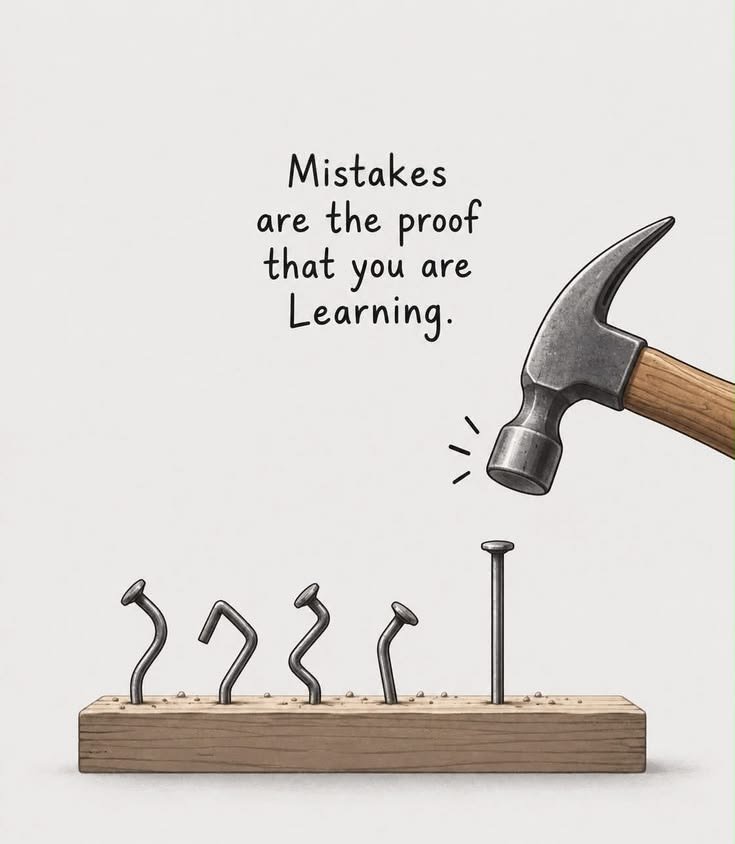
Failure is a normal part of personal and professional growth. However, making mistakes does not automatically lead to improvement. You must understand what went wrong and decide how to respond differently.
Consider an online business that receives website visitors but generates very few sales. Instead of immediately increasing advertising expenses, the owner should examine product information, website speed, delivery charges, and the checkout process.
Identifying the actual problem can lead to better decisions.
Similarly, students can review their examination mistakes, while job seekers can improve their interview preparation after receiving feedback.
Rather than treating every setback as a personal failure, use it as an opportunity to identify areas that need improvement. Learning from experience is an important principle in how to achieve success in life.
Keep Learning New Skills
Education and continuous learning can create opportunities in different industries. However, having certificates alone is not enough. Practical knowledge and the ability to apply what you learn are equally important.
Some valuable skills include:
- Communication and presentation
- Digital marketing and SEO
- Computer programming and technology
- Financial literacy and money management
- Problem-solving and critical thinking
- Leadership and teamwork
For example, someone interested in digital marketing can learn keyword research, practise website optimisation, and monitor search performance through practical projects.
Future Indicate shares information about education, technology, careers, and digital skills to help readers explore different professional opportunities.
When thinking about how to achieve success in life, remember that learning should continue beyond school or college. Developing relevant skills can help you adapt to changing career requirements.
If you want to build practical digital marketing skills, you can learn from Manjeet Madhukar, who provides professional digital marketing training along with real-world digital marketing services. His guidance can help you understand SEO, social media marketing, paid advertising and other essential skills while gaining practical industry knowledge.
Understand the Importance of Perseverance
Long-term goals require patience and consistent effort. Psychologist Angela Duckworth and her colleagues described grit as perseverance and passion for long-term goals.
Their 2007 research examined different groups, including university students, adults, military cadets, and spelling-bee competitors. The findings suggested that perseverance can contribute to achievement, although it explains only a small part of overall differences in success.
This means hard work matters, but opportunities, resources, education, support, and personal circumstances also influence outcomes.
Stay committed to your goals, but remain flexible enough to change your strategy when necessary. Continuing with an ineffective approach is not always the best decision.
Understanding how to achieve success in life also means knowing when to keep going and when to try a different direction.
Maintain Health and Financial Stability
Success should not come at the cost of your health, relationships, or personal happiness. A balanced lifestyle helps you manage responsibilities and remain productive.
Give attention to regular sleep, physical activity, nutritious food, and supportive relationships. Make time for family, friends, and activities that help you relax.
Financial responsibility is another important part of a stable life. Track your income and expenses, manage unnecessary spending, and develop a savings habit according to your financial situation.
A happy successful life is not measured only by salary, property, or professional position. It also includes personal satisfaction, meaningful relationships, and the ability to make responsible decisions.
Create a Practical Plan for Personal Growth
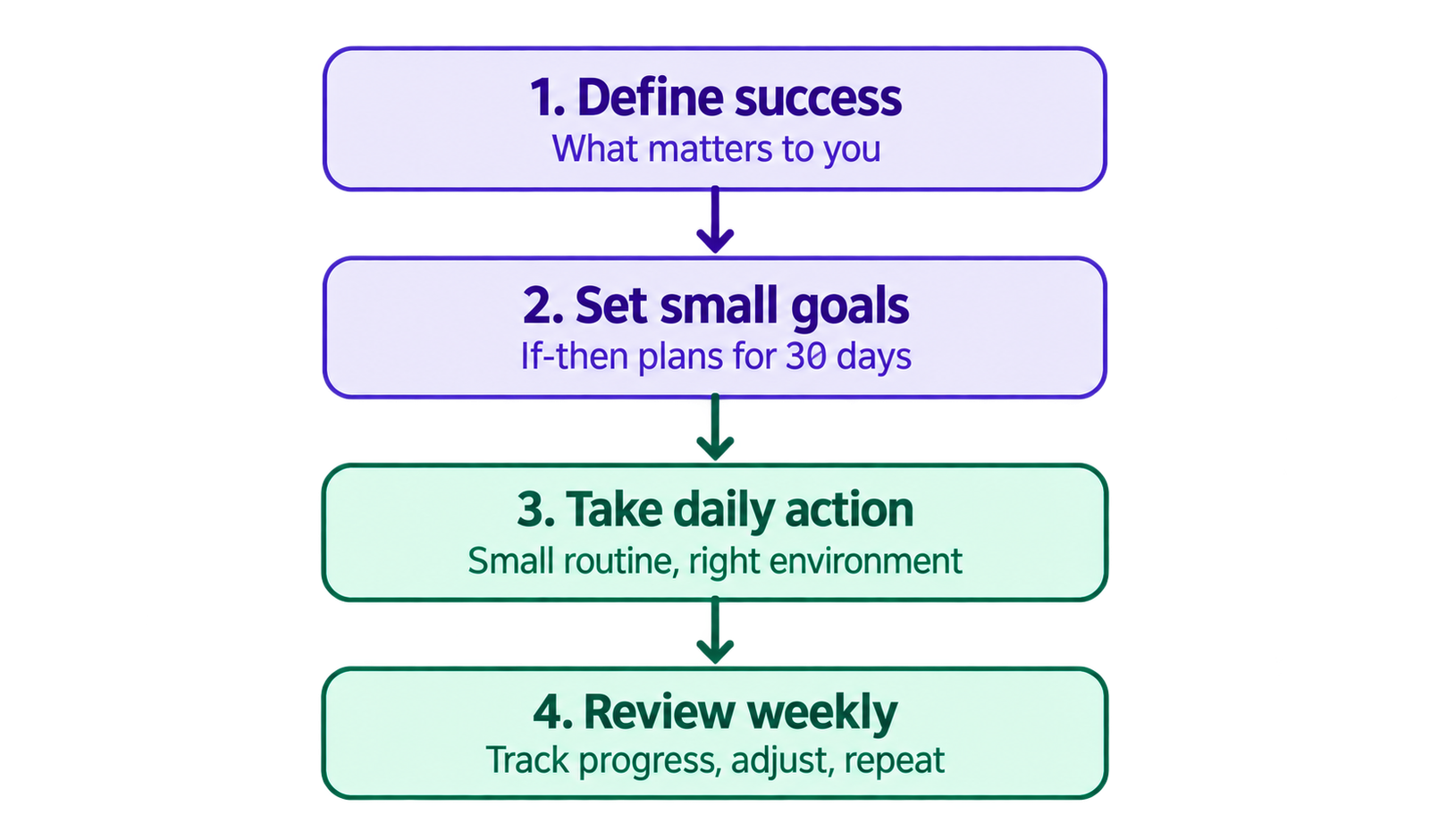
You do not need to change everything in one day. Begin with one meaningful goal and create a simple plan for the next 30 days.
Choose three actions that can help you achieve that goal. Decide when you will complete them and identify possible distractions.
At the end of every week, review your progress. Ask yourself what worked, what needs improvement, and what you should do differently.
Research by Benjamin Harkin and colleagues, published in 2016, examined 138 studies involving 19,951 participants. The meta-analysis found that monitoring progress can improve goal attainment.
This supports the importance of tracking your activities instead of relying only on memory or motivation.
A practical plan makes how to achieve success in life easier to understand because it turns long-term ambitions into manageable daily responsibilities.
Conclusion: Build a Life That Reflects Your Goals
Success is not a destination that everyone reaches in the same way. It is a continuous process of learning, improving, making thoughtful decisions, and working towards meaningful goals.
If you want to understand how to achieve success in life, start by defining your priorities, developing useful skills, practising discipline, and maintaining a positive mindset.
Remember that confidence grows through preparation, discipline develops through consistent habits, and failure can become a learning opportunity when you respond constructively.
Future Indicate encourages readers to explore educational opportunities, develop career skills, and make informed decisions about their future.
Start with one small step today. Stay consistent, review your progress, and keep improving. Over time, these practical efforts can help you build a more successful and fulfilling life.
Frequently Asked Questions
1. How to achieve success in life?
Define your goals, develop useful skills, follow a realistic routine, and review your progress regularly. Consistency and willingness to learn can help you move forward.
2. What are the most important qualities for success?
Self-discipline, confidence, patience, adaptability, communication, and problem-solving are valuable qualities for personal and professional development.
3. How can students become successful in life?
Students should follow a practical study routine, develop communication and digital skills, participate in projects, and explore career opportunities.
4. How can I improve my confidence?
Prepare for challenges, practise regularly, accept constructive feedback, and celebrate small achievements. Confidence generally improves with experience.
5. What should I do when I fail?
Understand what went wrong, identify areas for improvement, and prepare a better strategy for your next attempt.
6. Is discipline more important than motivation?
Motivation helps you start, while discipline and regular habits help you continue working towards your goals.
7. What is a happy successful life?
A happy successful life includes meaningful achievements, good health, supportive relationships, financial responsibility, and personal satisfaction.
8. Which skills are important for future career growth?
Communication, digital literacy, teamwork, adaptability, financial awareness, and industry-specific technical skills can support career development.
9. Does hard work guarantee success?
No. Success also depends on planning, opportunities, resources, timing, and the ability to make informed decisions.
10. What is the first step towards success?
Choose one meaningful goal, identify the next practical action, and start working on it today.